Stiff, tired, or achy hands can make simple daily tasks feel more frustrating than they should. Opening jars, typing on a keyboard, using your phone, cooking dinner, folding laundry, driving, or even gripping a coffee mug can feel harder when your hands do not feel comfortable.
The hands are involved in almost everything we do, which is why discomfort can be so noticeable. Even small tasks can start to feel annoying when your fingers feel tight, your joints feel sore, or your grip does not feel as steady as usual.
The good news is that small changes can make daily routines feel more manageable. You do not always need to completely stop what you are doing. Sometimes, the goal is to support your hands better, reduce unnecessary strain, and make everyday tasks easier to get through.
Here are a few practical ways to make daily life more comfortable when your hands feel stiff.
Start the Day With Gentle Hand Movement

When hands feel stiff, it can be tempting to avoid moving them. But gentle movement can help your hands feel less tight before you jump into daily tasks.
A few simple hand stretches in the morning can be a good place to start. Open and close your hands slowly, spread your fingers apart, make a loose fist, and gently rotate your wrists. You can also place your hand flat on a table and slowly lift one finger at a time.
The goal is not to force anything or push through pain. It is simply to wake up the hands and fingers before asking them to grip, type, lift, or carry things.
This can be especially helpful before work, cooking, cleaning, or any hobby that requires repetitive hand movement.
Use Tools That Reduce Grip Strain
A lot of hand discomfort comes from gripping too hard. Everyday items like jars, pens, knives, cleaning tools, and phone cases can all require more hand strength than expected.
Look for simple tools that make gripping easier. Jar openers, larger-handled utensils, ergonomic pens, rubber grips, and easy-pump dispensers can all reduce the amount of effort your hands need to use.
In the kitchen, choose tools with thicker handles when possible. A small, thin handle often requires more finger tension. A larger, softer handle can feel easier to hold.
The same idea applies around the house. Cleaning brushes, gardening tools, scissors, and grooming tools with ergonomic handles can help make repetitive tasks feel less demanding.
Take Breaks During Repetitive Tasks
Repetition can be hard on the hands. Typing, texting, cooking, sewing, cleaning, crafting, and using tools all involve repeated finger and wrist movement.
One of the simplest ways to make these tasks easier is to take short breaks before your hands feel overworked. Instead of waiting until discomfort builds, pause for a minute, stretch your fingers, shake out your hands gently, and reset your grip.
If you work at a computer, try taking a short hand break every so often. Relax your shoulders, loosen your wrists, and let your hands rest off the keyboard. If you use your phone a lot, switch hands, use voice-to-text when possible, or set the phone down instead of gripping it tightly for long periods.
Small breaks may not seem like much, but they can make a noticeable difference over the course of a long day.
Keep Frequently Used Items Easy to Reach
When your hands feel stiff, reaching, pulling, lifting, and digging through drawers can make basic tasks more annoying. A little organization can help.
Keep the items you use most often in easy-to-reach places. In the kitchen, store everyday dishes, mugs, spices, and cooking tools where you do not have to stretch or grip awkwardly. In the bathroom, keep toiletries, grooming tools, and medications organized so you are not rummaging through clutter.
At your desk, keep pens, chargers, notebooks, and work items within a comfortable range. Around the house, use baskets or bins to reduce the need to carry loose items one by one.
The less your hands have to fight with clutter, the easier your routine feels.
Try Compression Gloves for Extra Hand Support
For people who deal with hand stiffness, finger discomfort, or repetitive hand strain, compression gloves can be a useful comfort tool to keep at home.
ComfyBrace Copper Infused Compression Arthritis Gloves are designed to provide gentle compression and support for the hands and fingers. They are made for men and women and are commonly used by people looking for extra hand comfort during everyday activities.
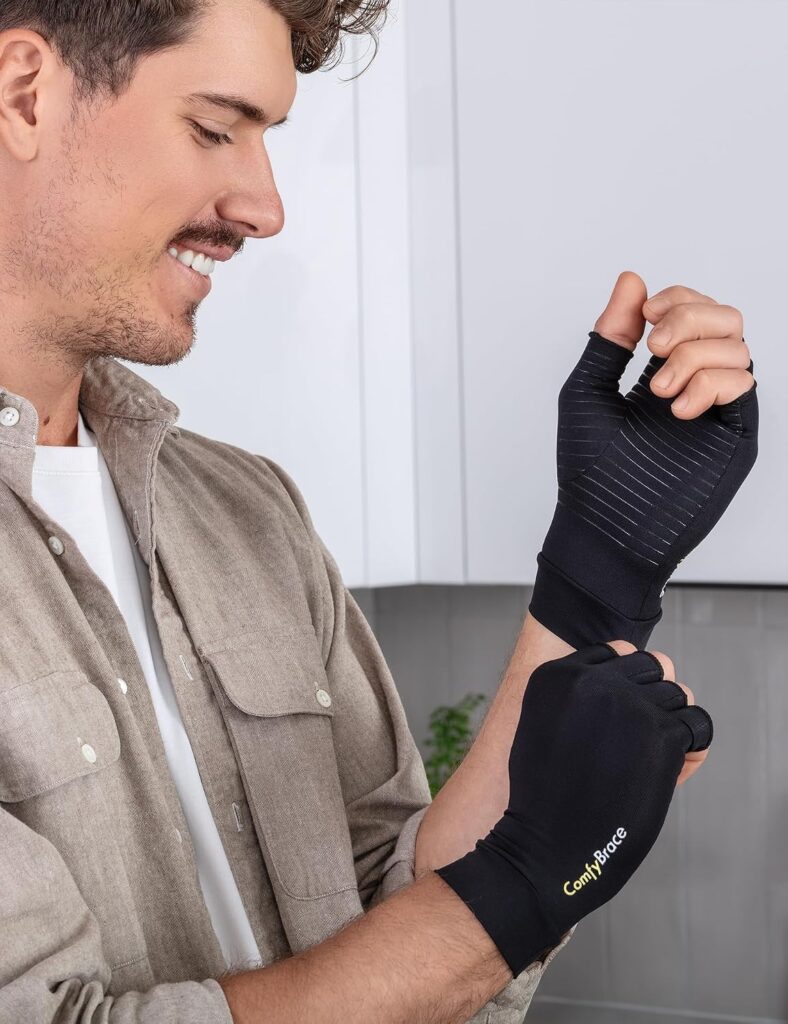
The fingerless design can make them practical for tasks like typing, using a phone, reading, cooking prep, crafting, or working around the house. Since the fingertips remain open, you can still touch, grip, and feel what you are doing while getting support through the hand and finger areas.
They may be especially worth considering if your hands tend to feel stiff during repetitive tasks or if you want something simple to wear while doing light activities at home. The goal is not to replace medical care or treat an underlying condition, but to add a supportive layer that may help your hands feel more comfortable during daily routines.
As with any product related to pain, swelling, arthritis, carpal tunnel, tendonitis, circulation issues, or ongoing hand discomfort, it is smart to check with a healthcare professional if symptoms are new, worsening, or interfering with daily life.
Make Cooking Less Demanding
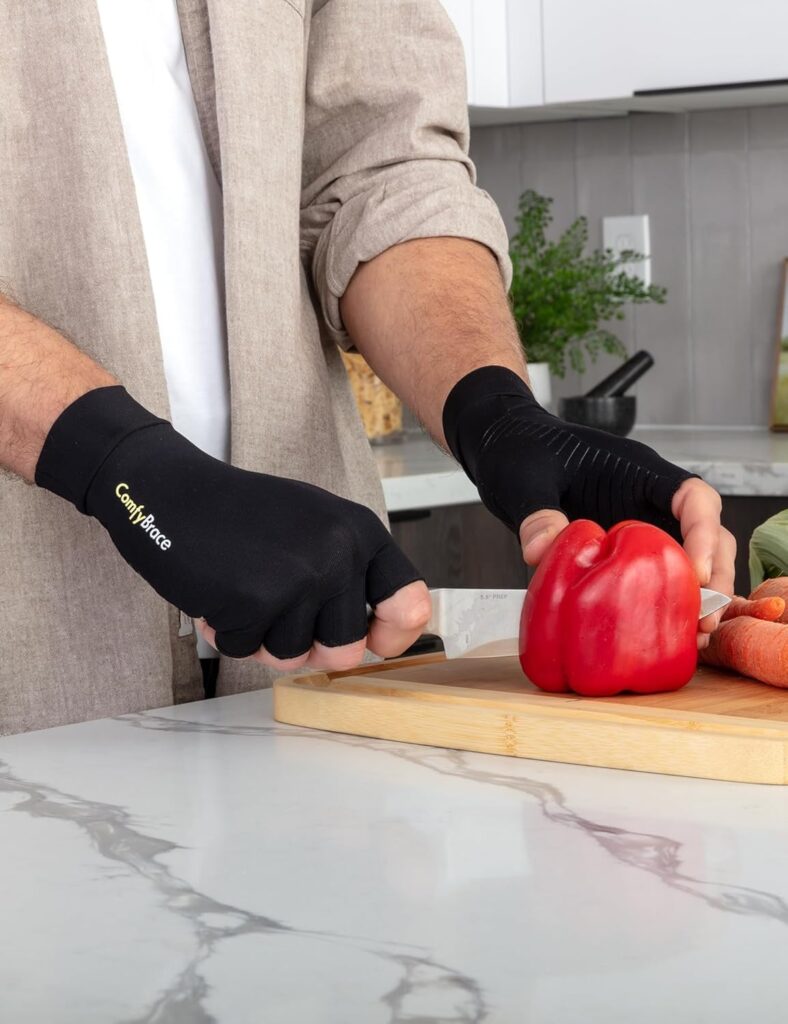
Cooking can be tough on stiff hands because it involves chopping, stirring, opening containers, lifting pans, gripping utensils, and washing dishes.
To make cooking easier, simplify the process where you can. Use pre-cut vegetables when needed, choose lighter cookware, use an electric can opener, and keep frequently used ingredients within reach. A non-slip cutting board can help reduce the amount of force needed to keep food steady.
You can also batch small tasks. Instead of chopping everything by hand every night, prep ingredients once or twice a week. Use kitchen scissors for herbs, greens, or smaller items when that feels easier than using a knife.
Cooking should not feel like a hand workout every time. A few shortcuts can make meals much more manageable.
Make Cleaning Easier on Your Hands
Cleaning can also be hard on the hands, especially if you are scrubbing, squeezing, wringing out cloths, or gripping spray bottles.
Use tools that do more of the work for you. Long-handled brushes, spray mops, lightweight vacuums, microfiber cloths, and easy-squeeze bottles can all reduce hand strain. Disposable wipes or paper towels can also be useful for quick cleanups when you do not want to scrub or rinse cloths repeatedly.
Try breaking cleaning into smaller sessions instead of doing everything at once. Wiping down counters, cleaning the bathroom mirror, or folding one load of laundry at a time can feel much easier than trying to power through a long cleaning day.
Pay Attention to Temperature
Some people notice that their hands feel stiffer in cold environments. If that sounds familiar, keeping your hands warm may help make tasks feel easier.
In the morning, try warming your hands with warm water before starting chores or computer work. Wear gloves outside when it is cold, and avoid holding cold drinks or frozen items for too long if they make your hands feel uncomfortable.
Warmth can also make certain routines feel more soothing. A warm towel, warm water soak, or gentle hand massage may help your hands feel more relaxed before bed or after a busy day.
Adjust Your Work Setup
If you spend a lot of time typing, your workspace matters. A poor setup can make your hands, wrists, arms, and shoulders work harder than they need to.
Keep your keyboard and mouse at a comfortable height. Your wrists should not feel like they are bending sharply up or down. Consider an ergonomic mouse, a softer wrist rest, or a keyboard that feels easier to type on.
Also pay attention to how tightly you grip the mouse. Many people hold it with more tension than they realize. Relaxing your grip and taking short breaks can help make computer work feel less tiring.
Listen to What Your Hands Are Telling You
Hand stiffness is easy to ignore until it starts getting in the way. Paying attention early can help you make small changes before everyday tasks become more frustrating.
Notice which activities make your hands feel worse. Is it typing? Cooking? Cleaning? Driving? Yard work? Phone use? Once you know the triggers, you can adjust your routine, use better tools, take more breaks, or add support where needed.
You do not have to push through every task the same way you always have. Sometimes, making life easier is simply about being more thoughtful with how you use your hands.
Final Thoughts
When your hands feel stiff, daily life can feel more difficult than usual. But small changes can help. Gentle movement, better tools, short breaks, easier organization, warmer hands, and a more comfortable work setup can all make a difference.
Compression gloves like the ComfyBrace Copper Infused Compression Arthritis Gloves can also be a practical support option for people who want extra hand and finger comfort during everyday tasks.
The goal is not to stop using your hands. It is to support them better so cooking, typing, cleaning, hobbies, and daily routines feel less frustrating. With the right habits and a few helpful tools, you can make everyday tasks feel easier and more manageable.
Thank you for reading this post, don't forget to subscribe to our newsletter!