Tired, achy feet can make an ordinary day feel much longer than it needs to. Maybe your feet feel sore after work. Maybe your heels ache after running errands. Maybe your arches feel tired after walking, standing, exercising, or simply getting through a busy schedule.
When that happens, most people blame the shoes.
It makes sense. If your feet hurt, your shoes seem like the obvious problem. But sometimes the issue is not that the shoe is the wrong size or the wrong style. Sometimes your feet may simply need more support than your shoes are giving them.
Many everyday shoes come with basic factory insoles that are thin, soft, and not designed to provide much, if any, real arch support. They may feel comfortable at first, but that cushion can quickly bottom out after hours of standing or walking. Once that happens, your feet are left doing more of the work without enough cushioning, stability, or support.
That is why a better insole can be such a simple but overlooked upgrade. Instead of replacing every pair of shoes you own, the right orthotic insole can help give your feet the support they need most.
Why Your Feet Feel Tired at the End of the Day

Foot fatigue can happen for several reasons. Long hours on hard floors, walking more than usual, standing at work, wearing unsupportive shoes, or repeating the same movements every day can all add stress to your feet.
Your feet carry your entire body through the day. When they are not properly supported, that pressure does not always stay in one place. It can show up as sore heels, tired arches, foot stiffness, ankle discomfort, shin soreness, knee strain, hip tightness, or even lower back discomfort.
That does not mean every ache is serious, but it does mean your feet deserve more attention than they usually get. If you spend money on comfortable shoes but still feel sore at the end of the day, the answer might be better support for your feet.
Your Shoes Might Fit But Still Lack Support
A shoe can fit your foot and still not support your foot well.
Fit and support are not the same thing. Fit is about length, width, and comfort around the foot. Support is about how well the shoe helps stabilize your foot, cushion impact, support your arch, and reduce unnecessary strain during movement.
Many casual shoes, work shoes, sneakers, and walking shoes include removable factory insoles. These insoles may feel soft when you first try the shoe on, but soft foam is not the same as structured support. Most factory insoles offer little to no arch support, and the cushioning that feels nice for a while can quickly compress or bottom out with regular use.
That is where an orthotic insole can make a difference. A good insole can transform the way your shoes feel by adding a level of arch support, cushioning, and stability that most standard shoes simply do not provide on their own.
What a Better Insole Can Do
A good insole should do more than simply add padding. The best daily insoles are designed to support the structure of the foot while also improving comfort.
That can include arch support to help cradle the foot, cushioning to absorb shock, heel support to help with stability, and motion control to reduce excess movement during walking or standing.
For people who deal with tired feet, heel discomfort, mild to moderate pronation, or long days on their feet, that combination can be especially helpful. When your feet feel more supported, walking and standing can feel less draining.
Insoles can also be useful because they work with shoes you already own. If your athletic shoes, walking shoes, work shoes, or casual shoes have removable factory insoles, replacing them with a more supportive option can be one of the easiest comfort upgrades to try.
What to Look for in an Insole
When your feet need more support, it helps to know what separates a basic shoe insert from a supportive orthotic insole. Some inserts are mostly soft foam. They may feel comfortable for a short time, but they often flatten out quickly and do not provide real support.
Unsupportive footwear is what makes products like the PowerStep Pinnacle worth considering. It is designed as a full-length orthotic insert with neutral arch support, maximum cushioning, and pronation correction support, making it a strong daily option for people who want comfort and structure in one insole.
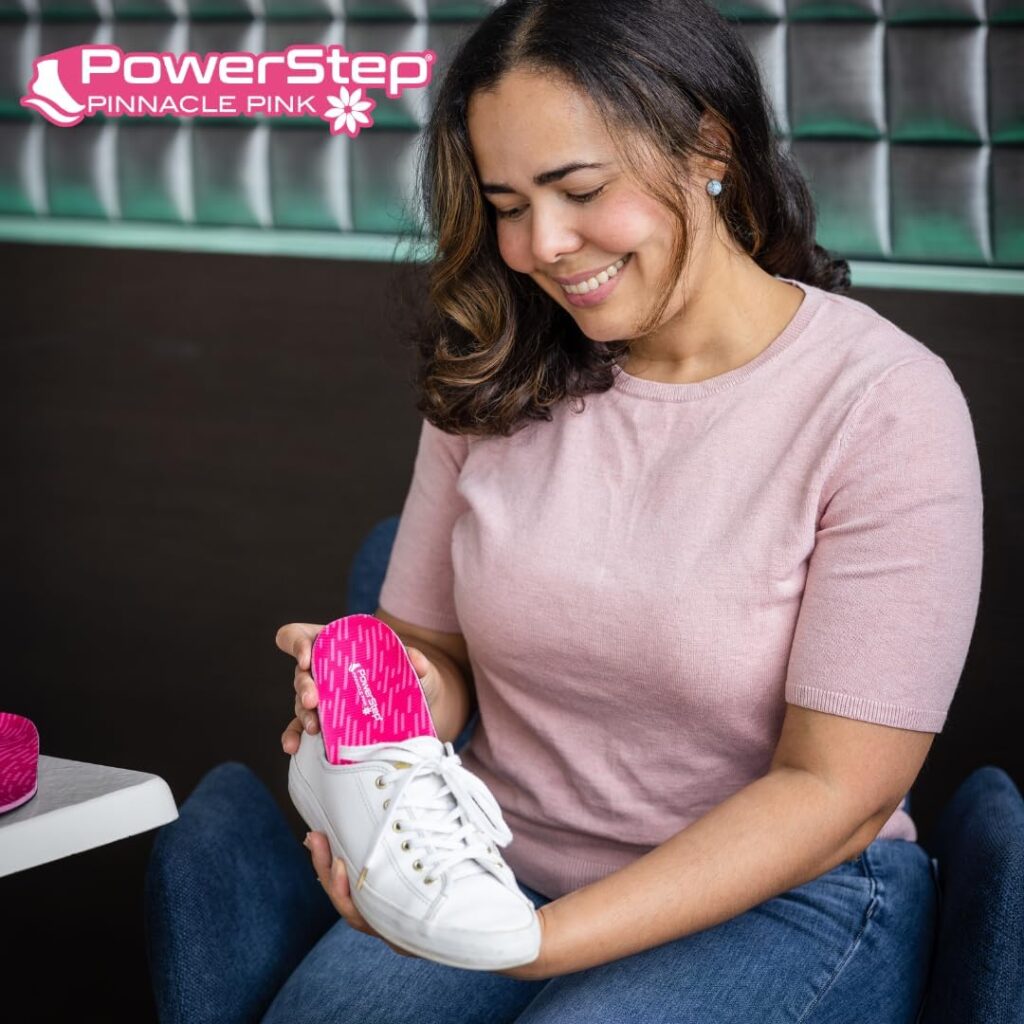
The PowerStep Pinnacle Pink insoles for women are made for shoes where the factory insole can be removed. Instead of relying on the thin insert that came with the shoe, you can replace it with a full-length orthotic insole designed to provide more structure, cushioning, and support. Instead of trimming and guessing, you order by shoe size for an exact fit, which makes the process much easier for people trying supportive insoles for the first time.
A good insole should help with three things: arch support, cushioning, and stability.
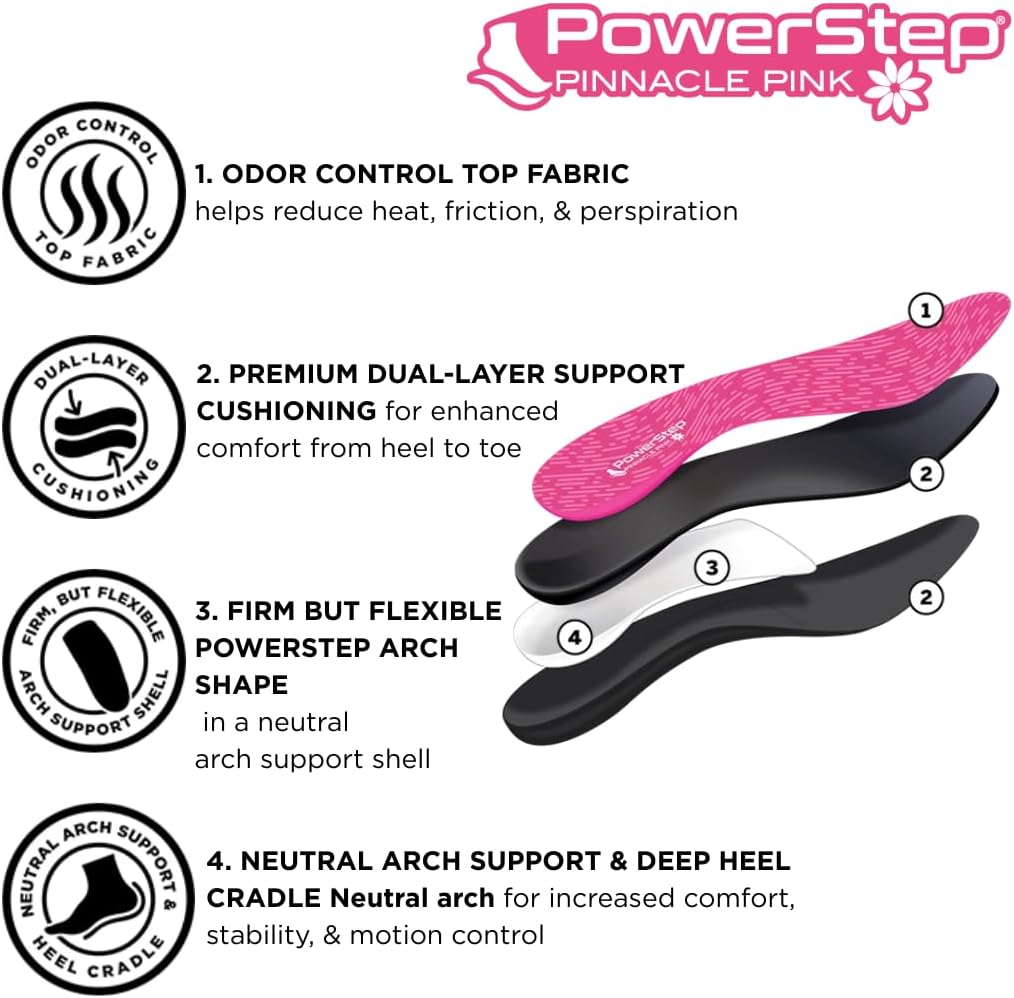
Arch support matters because when the arch is not supported well, your foot works harder throughout the day. PowerStep Pinnacle features the Proven PowerStep Arch Shape, which helps support the arch while adding stability and motion control.
Cushioning matters because every step creates impact. Walking on tile, concrete, pavement, office floors, grocery store aisles, or sidewalks can add up throughout the day. PowerStep Pinnacle uses dual-layer cushioning for shock absorption, giving your feet a balance of softness and support.
Stability matters because some feet roll inward more than they should during walking. This is often described as mild to moderate pronation. PowerStep Pinnacle includes pronation correction support to help support more stable movement.
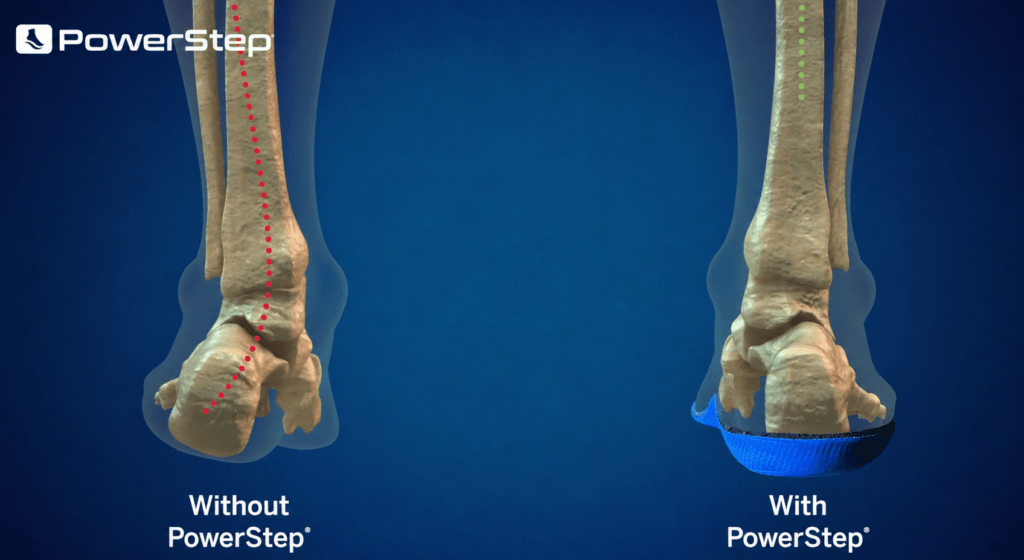
That combination is what makes a supportive orthotic insole different from the thin, low-support inserts that often come standard in many shoes. PowerStep Pinnacle is designed to help with pain management and support for common foot and lower-body discomfort, including plantar fasciitis, mild to moderate pronation, Achilles tendonitis, shin splints, and foot, ankle, knee, hip, and back pain.
It also works across a variety of shoe types, including athletic shoes, walking shoes, running shoes, work shoes, and casual shoes. That gives it a lot of everyday flexibility. You can use it for errands, workdays, walks, workouts, travel, or any routine where your feet need more support.
Another reason to try a PowerStep insole is that the brand has built a loyal following of people who rely on its insoles as part of their daily comfort routine. For many, once they experience the difference between a basic factory insert and a more supportive orthotic insole, it’s hard to go back.
PowerStep Pinnacle is also HSA and FSA eligible, which can be helpful for shoppers using eligible health spending accounts. Plus, it is available on Amazon, making it easy to order with fast, convenient delivery.
Insoles Can Help You Keep Wearing Shoes You Already Like
One of the best parts about trying insoles is that you may not need to give up your favorite shoes. If the shoe has enough room and the factory insole can be removed, a supportive orthotic insole can transform the way that pair feels by adding the kind of arch support, cushioning, and stability that most shoes do not offer by themselves.
This is helpful for work shoes, walking sneakers, casual shoes, gym shoes, and travel shoes. Instead of buying a new pair every time your feet feel sore, you can upgrade the support your feet get from the shoes you already reach for.
That makes insoles a low-barrier comfort upgrade. They are easy to try, easy to swap between compatible shoes, and easy to build into your daily routine.
When to Talk to a Professional
Insoles can be helpful, but ongoing pain should not be ignored. If your foot pain is severe, getting worse, one-sided, affecting how you walk, or not improving with better shoes and support, it is a good idea to talk to a podiatrist or healthcare professional.
The same is true if you have diabetes, numbness, swelling, injury, or sharp pain. A professional can help identify what is actually causing the problem and whether you need custom orthotics, physical therapy, imaging, or other treatment.
For everyday tired, achy feet, though, a supportive daily insole can be a practical place to start.
Final Thoughts
If your feet hurt at the end of the day, the answer may not be a brand-new pair of shoes. It might be better support for your feet.
PowerStep Pinnacle is a strong daily insole option because it combines neutral arch support, maximum cushioning, pronation correction support, shock absorption, and a full-length orthotic design. It is made for shoes with removable factory insoles, designed for exact fit sizing with no trimming, and works across many everyday shoe types.
For people dealing with tired feet, heel discomfort, arch fatigue, plantar fasciitis-related pain, mild to moderate pronation, or long days standing and walking, it offers a simple way to upgrade daily foot support.
Your feet do a lot for you every day. Giving them better support may be one of the easiest ways to make work, errands, walking, travel, and everyday movement feel more comfortable.
Thank you for reading this post, don't forget to subscribe to our newsletter!