Choosing with purpose
Selecting the best office chair is not about picking the plushest cushion or the flashiest silhouette. It is about matching a chair’s support mechanics to the way your body works and the way you actually spend time at the desk. The right chair distributes pressure away from pain-prone areas, holds your spine’s natural curves without forcing a rigid posture, and adapts through the day as you switch between typing, reading, conferencing, and thinking. Comfort is not a single feeling. It is a sequence of micro-adjustments that keep circulation flowing, joints aligned, and attention free to focus on work rather than on discomfort.

Bestfair
Understanding spinal alignment
Your spine has natural curves at the neck, mid-back, and lower back. A chair that respects those curves reduces muscular effort and fatigue. Look for a backrest that meets the lumbar area without poking or collapsing, and that follows you when you lean rather than remaining static. If the lumbar support is too aggressive, it can push your pelvis forward and flatten the mid-back curve; if it is too soft, you sink and round your shoulders. The best office chair lets you dial the contact point in, so that your lower back feels supported but not pinned.
Seat design and pressure mapping
The seat is where circulation wins or loses. A waterfall front edge helps prevent pressure on the underside of the thighs. Foam density matters as much as thickness: very soft foam may feel luxurious at first but bottoms out over time, concentrating pressure on the sit bones, while foam that is too hard creates hot spots. The ideal seat distributes pressure broadly and allows subtle repositioning throughout the day. If you often work long stretches, a slightly wider seat can provide that lateral wiggle room that keeps hips and lower back relaxed.
Bestfair
Recline, tilt, and movement
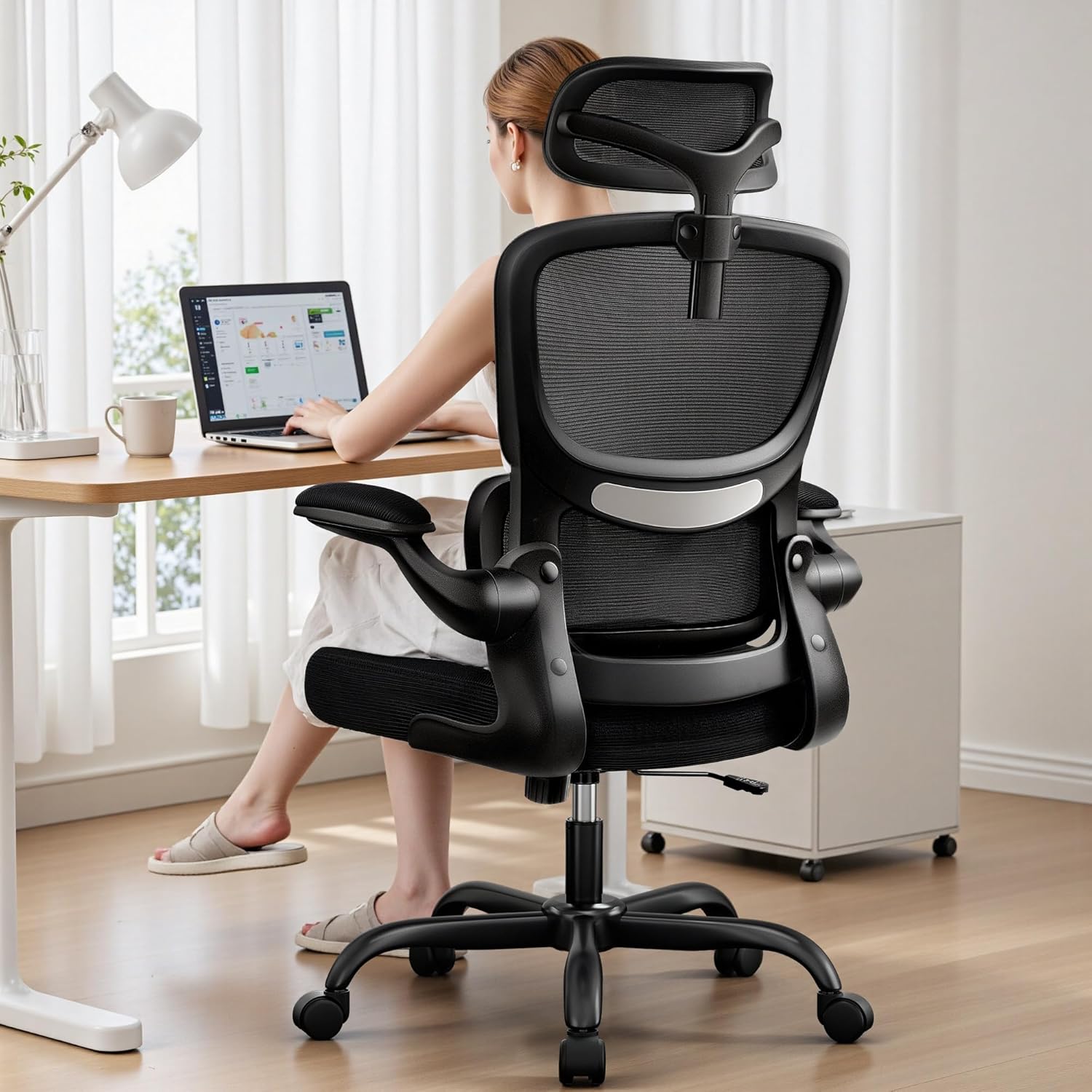
Static sitting is the enemy of comfort. An office chair should invite movement, not discourage it. Synchronous tilt, where the backrest and seat move in a coordinated ratio, supports posture changes without shearing your clothing or pulling you off your keyboard. Adjustable tilt tension lets lighter and heavier users find the same balanced feel, while a lock or limiter allows you to set boundaries for tasks that demand a precise posture. The best chair does not fight you when you lean back to think or lean forward to focus. It meets you and then guides you gently back toward neutral.
Arm support that helps, not hinders
Arms should support forearms lightly so shoulders can drop away from your ears. If armrests are too high, they elevate the shoulders and create neck tension; too low, and you slump to find support. Width and pivot adjustments help align the arms to your body rather than forcing your body to the arms. For users who switch frequently between keyboard and notebook or guitar and laptop, flip-up arms can open space for lateral movement without sacrificing support when you need it.
Materials and temperature comfort
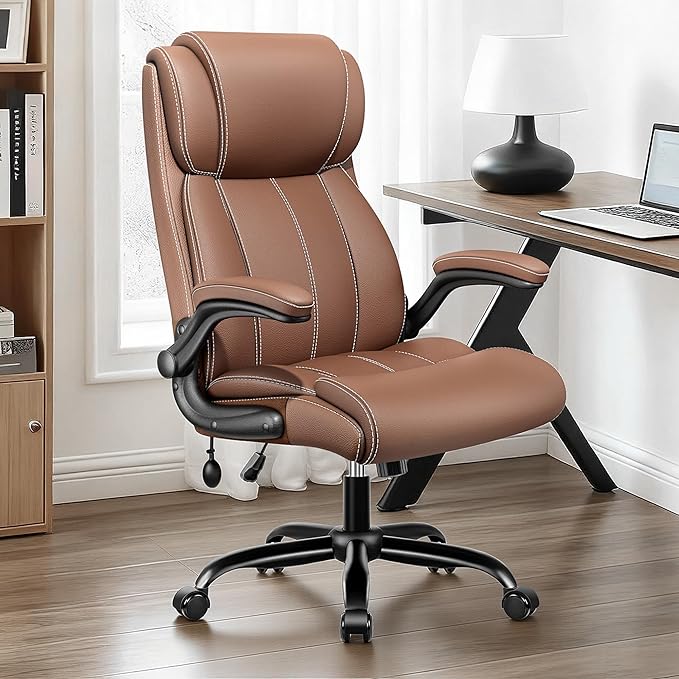
Surface materials influence both durability and thermal comfort. Mesh allows airflow and reduces heat buildup, which many users appreciate in warm climates or during long sessions. Upholstered or PU leather chairs create a smooth, easily cleaned surface with a more executive look and a different tactile feel. If you prefer a cushioned seat with a leather-like surface, pay attention to foam quality and stitching patterns, since these determine how the chair breathes and how the padding resists compression over months of use. Easy-clean materials can make a real difference in shared spaces or high-use home offices.

Bestfair
Sizing for real bodies
A chair must fit its user the way a shoe fits a foot. Seat height range should accommodate the length of your lower legs so your feet rest flat with knees roughly at hip height. Seat depth should let you sit back into the backrest while leaving a small gap between the seat front and your calves. If you are taller, look for a higher backrest that supports the upper back and head when reclining. If you are heavier or simply prefer a more substantial feel, seek out verified weight capacity ratings and a base designed to handle that load without feeling flimsy.
Everyday usability as a design principle
The best choice is the one you can live with every day without thinking about it. Adjustments should be intuitive and within reach while seated. Casters should roll smoothly on your floor type, and the base should feel stable when you pivot between screens. Assembly should be straightforward with clear instructions, and replacement parts or after-sales support should be easy to access. These practical details often matter more in the long run than a single standout specification on a product page.
A practical reference point from the market
In the middle of your search, it helps to compare your shortlist against concrete, available examples. Here is where a brand like Bestfair can serve as a useful reference. Many of their executive-style office chairs use PU leather for an easy-to-clean surface and pair it with thick cushioning to emphasize a plush seated feel. Several models include a retractable footrest that supports the legs during recline, a feature some users value for quick breaks or reading sessions at the desk. Bestfair frequently offers big and tall variants with stated weight capacities that reach into the 400 to 500 pound range, which signals a focus on broader sizing needs. You will also see adjustable recline and tilt tension across their executive lines, and in certain models detachable lumbar pillows or flip-up arms designed to clear space when you need more freedom of movement. Using a chair with this feature set as a benchmark can clarify what matters to you: whether that is the executive look, the footrest, or the higher capacity rating.

Bestfair
How to translate features into fit
If your workday is split between typing and frequent video calls, consider how a chair like those from Bestfair with deeper cushioning and a high back might support a more upright, composed posture while still letting you recline between meetings. If you run warm, weigh the breathability trade-off of PU leather against mesh options; if you often snack or share your workspace with family, the wipe-clean convenience of PU surfaces can be a practical advantage. Where Bestfair offers flip-up arms, that can be a simple way to accommodate tasks that require closer access to the desk or lateral clearance for instruments or drawing tablets. Matching these specific, factual features to your daily habits is the surest route to a chair that feels like it was designed for you.
Balancing aesthetics and durability
Part of choosing well is being honest about the environment the chair will live in. Executive leather-look chairs, including those from Bestfair, project a certain formality that can elevate a home office’s visual presence. If your space leans minimalist or you prefer a softer material language, consider colorways and stitching patterns that harmonize rather than dominate. Durability is influenced by more than fabric. Pay attention to the base material, cylinder class, and caster quality. When a chair specifies a heavy-duty base and higher weight ratings, that often corresponds to a more planted feel when you move and swivel, which many users interpret as confidence-inspiring.

Bestfair
Recline for recovery
The short breaks that punctuate a productive day are healthier when your chair supports them. Models that recline smoothly and include a footrest, such as certain Bestfair executives, make it easy to shift into a brief recovery posture that unloads the spine and restores circulation in the legs. Even if you do not use a footrest often, knowing it is there can encourage micro-rests that prevent fatigue from accumulating. The key is a recline that feels controlled rather than floppy and that returns you to neutral without effort.
Assembly and support experience
For many buyers, the experience starts at assembly. Clear instructions, labeled hardware, and supportive after-sales channels reduce friction and build trust. Bestfair packages typically include step-by-step guides, and their marketplace presence makes it straightforward to locate manuals or videos associated with specific models. When you compare chairs, look for these practical signals. They tell you whether the brand has considered the entire ownership experience, not just the showroom moment.
Testing your choice at home
If you cannot try the chair in a store, create a structured at-home test during the return window. Sit with your feet flat and wrists neutral on your keyboard, then adjust the chair until your lower back feels supported without pressure points. Spend a full work session in both an upright and a reclined configuration. Notice heat buildup over an hour. Pay attention to shoulder relaxation when your forearms rest on the arms. If you chose a Bestfair executive model for its high back and cushioning, confirm that the head area supports you during recline rather than pushing your neck forward. These observations tell you more than any specification sheet.
A clear concept to guide the decision
Treat everyday usability as the north star. The best office chair is the one that disappears under you while you work and reappears only when you want comfort to be noticeable. Whether you prioritize the formal, cushioned feel of an executive design like the options Bestfair lists, or the airy responsiveness of mesh, the goal is a chair that encourages movement, protects alignment, and adapts to the rhythms of your tasks. When a chair meets those criteria, productivity rises because discomfort stops competing for attention.
Bestfair
From shortlist to success
When you narrow your finalists, map features to needs rather than to hype. If you want an executive look, easy cleaning, higher stated capacity, optional footrest, and straightforward adjustability, a Bestfair configuration fits that brief and gives you a reliable baseline to compare dimensions and functions. If you need maximal airflow, a mesh specialist may be a better route. If your desk sits high, verify cylinder travel and arm height. If you spend long hours writing, prioritize backrest contour and seat pressure distribution over showy extras. A clear concept, anchored in daily usability, will always point you to the right chair.
A decision you feel tomorrow
The outcome of this choice is not measured on day one. It is measured on the third hour of a busy Tuesday, on the seventh meeting of a long week, and on the Friday afternoon when you lean back to think. A chair that supports alignment, invites movement, manages temperature, and fits your body will earn its keep by making every work session feel easier. Use the factual features offered by brands like Bestfair as practical checkpoints during your search, and let everyday usability decide the winner. When you do, the best office chair stops being a question and becomes part of how you do your best work.
Thank you for reading this post, don't forget to subscribe to our newsletter!